This is default featured slide 1 title

Go to Blogger edit html and find these sentences.Now replace these sentences with your own descriptions.

This is default featured slide 2 title

Go to Blogger edit html and find these sentences.Now replace these sentences with your own descriptions.

This is default featured slide 3 title

Go to Blogger edit html and find these sentences.Now replace these sentences with your own descriptions.

This is default featured slide 4 title

Go to Blogger edit html and find these sentences.Now replace these sentences with your own descriptions.

This is default featured slide 5 title

Go to Blogger edit html and find these sentences.Now replace these sentences with your own descriptions.

Showing posts with label WW2. Show all posts

Wednesday, January 16, 2013

San Diego Union Tribune had a cool story today, a WW2 PBY Catalina (patrol plane) was flown into San Diego


PBYs were patrol planes that spotted enemy submarines, ships and planes, escorted convoys, served as patrol bombers and occasionally made air-and-sea rescues.

Slattery purchased the plane in 2010 and finished the restoration two businessmen  started but didn't complete in South Africa.

 Just getting the plane qualified to return to the United States was a substantial undertaking, because Slattery had to fly a Federal Aviation Administration official to South Africa for an inspection.  The plane couldn’t return to the United States until it met FAA regulations.

 Once all the repairs were made, in all a six-year project, and it met federal guidelines, the next step was flying the 70-year-old aircraft 1/2 way across the world at a top speed of 120 miles per hour.

 So Slattery sent three of his full-time employees — pilots Bob Franicola and Mike Castillo and chief mechanic Matt Voigt. The trio flew from South Africa to Namibia to Angola to Cameroon to Liberia to Brazil to French Guiana to Trinidad to Panama to Costa Rica to Mexico. The first 14 legs of the trip ranged from five hours to 13 hours apiece. The final two legs were from Tijuana to Brown Field and then on to Gillespie Field

The aircraft is the 46th in Slattery’s collection and will eventually be on display in a “Greatest Generation Naval Museum,” that he intends to open in the coming months.

Photos from http://www.utsandiego.com/news/2013/jan/15/businessman-brings-WWII-plane-home/ plus the rest of the article.

Intrigued by history, Mr. Slattery is a collector of historical aircraft. His impressive collection includes a 1929 WACO UPF-7, one of the first US mail carriers flown by Charles A. Lindbergh on the Minneapolis-Chicago mail route and number 3 of only 4 produced. It is the only flyable one in the world today, but is only one among many rare and historic planes that make up the collection.

 Although this collection would be enough reason for anyone to be proud, perhaps the most noteworthy aspect of Mr. Slattery’s flight hobbies includes not only his many achievements, but how he has sought out ways to share his pursuits with others in his current undertaking – “The Greatest Generation Naval Museum.”

 Scheduled to be up and running within a year, The Greatest Generation Naval Museum will exhibit planes, along with other memorabilia, that demonstrate how World War II changed the way Americans live today. What separates this museum from others is that every plane on display will be, not only in pristine condition, but 100 percent flyable and will also be used for air shows and other venues all over the country.

The mission behind the museum, is to provide people with an understanding of the historical significance of World War II, while honoring those that were lost. Building a tribute to the aviation community and the sacrifices of America’s Greatest Generation is, when it comes to aviation, Mr. Slattery’s truest and greatest passion.

 If you’d like to make a financial contribution for The Greatest Generation Museum project, send your check or money order to:
 Attn: Nicole Rivera
 16981 Via Tazon
San Diego, CA 92127

 The museum also gratefully accepts personal memorabilia.  http://tomcurrencompanies.com/blog/jim-slattery/

If you like WW2 military museums, try the ones listed here: http://greatnavymusueums.blogspot.com/2011/11/greatest-generation-says-goodbye.html

Sunday, January 13, 2013

Advertising through the 30's, 40's and 50's


A lot of issues being addressed in these ads, blimps, women drivers, war ration gasoline, and Disney advertising for a gas company. 

Thursday, January 10, 2013

the last flight of the B-17 All American


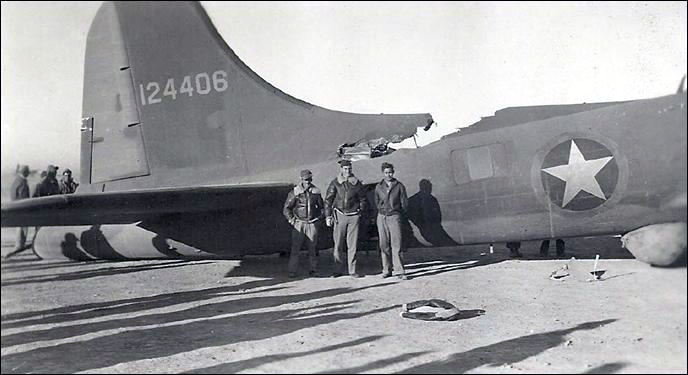
A mid-air collision on February 1, 1943, between a B-17 and a German fighter over the Tunis dock area, became the subject of one of the most famous photographs of WW II.
    An enemy fighter attacking a 97th Bomb Group formation went out of control, probably with a wounded pilot, then continued its crashing descent into the rear of the fuselage of a Fortress named "All  American", piloted by Lt. Kendrick R. Bragg, of the 414th  Bomb Squadron. When it struck, the fighter broke apart, but left some pieces in the B-17. The left horizontal stabilizer of the Fortress and left elevator were completely torn away. The two right engines were out and one on the left had a serious oil pump leak. The vertical fin and the rudder had been damaged, the fuselage had been cut almost completely through connected only at two small parts of the frame, and the radios, electrical and oxygen systems were damaged. There was also a hole in the top that was over 16 feet long and 4 feet wide at its widest; the split in the fuselage went all the way to the top gunner's turret.


Although the tail actually bounced and swayed in the wind and twisted when the  plane turned and all the control cables were severed, except one single elevator cable still worked, and the aircraft miraculously still flew!

The tail gunner was trapped because there was no floor connecting the tail to the rest of the plane. The waist and tail gunners used parts of the German fighter and their own parachute harnesses in an attempt to keep the tail from ripping off and the two sides of the fuselage from splitting apart. 
While the crew was trying to keep the bomber from coming apart, the pilot continued on his bomb run and released his bombs over the target.


When the bomb bay doors were opened, the wind turbulence was so great that it blew one of the waist gunners into the broken tail section. It took several minutes and four crew members to pass him ropes from parachutes and haul him back into the forward part of the plane. When they tried to do the same for the tail gunner, the tail began flapping so hard that it began to break off. The weight of the gunner was adding some stability to the tail section, so he went back to his position.

The turn back toward England had to be very slow to keep the tail from twisting off. They actually covered almost 70 miles to make the turn home. The bomber was so badly damaged that it was losing altitude and speed and was soon alone in the sky.
 
For a brief time, two more Me-109 German fighters attacked the All American. Despite the extensive damage, all of the machine gunners were able to respond to these attacks and soon drove off the fighters. The two waist gunners stood up with their heads sticking out through the hole in the top of the  fuselage to aim and fire their machine guns. The tail gunner had to shoot in short bursts because the recoil was actually causing the plane to turn. 


Allied P-51 fighters intercepted the All American as it crossed over the Channel and took one of the pictures shown. They also radioed to the base describing that the appendage was waving like a fish tail and that the  plane would not make it and to send out boats to rescue the crew when they bailed out.
 
The fighters stayed with the Fortress, taking hand signals from Lt. Bragg and relaying them to the base. Lt. Bragg signaled that 5 parachutes and the spare had  been "used" so five of the crew could not bail out. He made the  decision that if they could not bail out safely, then he would stay with the plane to land it. 
Two and a half hours after being hit, the aircraft made its final turn to line up with the runway while it was still over 40 miles away. It descended into an emergency landing and a normal roll-out on its  landing gear.

When the ambulance pulled alongside, it was waved off because not a single member of the crew had been injured. No one could believe that the aircraft could still fly in such a condition. The Fortress sat placidly until the crew all exited through the door in the fuselage and the tail gunner had climbed down a ladder, at which time the entire rear section of the aircraft collapsed .
 Thanks to Randy for the email!

Friday, December 7, 2012

I found a great tumblr today, perfectly named, and has great content . . Time Wasting Machine.tumblr.com


 I don't know if that above is a Corsair or Mustangf


among the many wow photos, the above airport VW is pretty damn cool. Just another example of the VW being the most utilitarian customized car and van since the model T


Rail gun... German, WW2, and ginormous


I've been trying to get a photo of hood scoops like the above for quite a long time


Poor Jag


terrific set of design studies from the concept cars


all found with great pleasure on http://timewastingmachine.tumblr.com/