This is default featured slide 1 title

Go to Blogger edit html and find these sentences.Now replace these sentences with your own descriptions.

This is default featured slide 2 title

Go to Blogger edit html and find these sentences.Now replace these sentences with your own descriptions.

This is default featured slide 3 title

Go to Blogger edit html and find these sentences.Now replace these sentences with your own descriptions.

This is default featured slide 4 title

Go to Blogger edit html and find these sentences.Now replace these sentences with your own descriptions.

This is default featured slide 5 title

Go to Blogger edit html and find these sentences.Now replace these sentences with your own descriptions.

Showing posts with label B 17. Show all posts

Sunday, January 13, 2013

I love a B 17 bomber story, here is a good one , a surplus B 17, a guy who couldn't fly one, who wrote bad checks, and couldn't get a permit to move it and build a gas station

In Milwaukie Oregon, on the 99e highway, also known as McLoughlin Blvd, 6 miles south of Portland Oregon. Between I5 and the 205

Above is the "Before" photo referring to the current or recent restoration. Notice the great fluorescent lights under the wings

Below you can see that the nose and cockpit are removed for renovations


Shortly after WWII , Art Lacey went to Kansas to buy a surplus B-17. His idea was to fly it back to Oregon, jack it up in the air and make a gas station out of it.

 He paid $15,000 for it. He asked which one was his and they said take whichever you want because there were miles of them. He didn't know how to fly a 4 engine airplane so he read the manual while he taxied around by himself. They said he couldn't take off alone so he put a mannequin in the co-pilot's seat and off he went.

 He flew around a bit to get the feel of it and when he went to land he realized he needed a co-pilot to lower the landing gear. He crashed and totaled his plane and another on the ground. They wrote them both off as "wind damaged" and told him to pick out another. He talked a friend into being his co-pilot and off they went.

 They flew to Palm Springs where Lacey wrote a hot check for gas then they headed for Oregon. They hit a snow storm and couldn't find their way so they went down below 1,000 feet and followed the railroad tracks. His partner sat in the nose section and would yell, "TUNNEL" when he saw one and Lacey would climb over the mountain.

 They landed safely, he made good the hot check he wrote, and they started getting permits to move a B-17 on the state highway. The highway department repeatedly denied his permit and fought him tooth and nail for a long time so late one Saturday night he just moved it himself. He got a $10 ticket from the police for having too wide a load.

The plane weighs 32 tons, is 75' long and has a wingspan of 104'. Mr. Lacey worked on planes during WWII but he was not a great pilot. The gas station opened in 1947, followed by the Bomber Drive-In in 1948. The station started out with five pumps but eventually had 40. Although it closed in 1991, the original family still runs the restaurant and the plane is still on display

 just 6 miles South of Downtown Portland on Hwy 99E. Just get on 99E (aka Mcloughlin Blvd.) and head South. About 1/2 mile out of Milwaukie you will see the Big B-17G Bomber. http://www.thebomber.com/

gas stations and gas company advertising, mostly 1930's and 40's


A footnote of interest in history, and I think a lot of people have forgetten, that during world war II, so many men in America were drafted into the military, that in order to keep American jobs alive, and to make munitions, tanks, airplanes, and so many of the suddenly necessary things that fighting the war created a need for, women stopped being treated like domestic prisoners. They even formed a baseball league, since the majority of the baseball players were drafted (See the movie "A League Of Their Own")


Above, good design thinking, why not have the gas station provide shade for the mechanics, cars, and customers? Not just shade, but shelter from rain and snow!


Some time ago, the company Montgomery Ward was like Target. It operated from 1872 to 2001. Then couldn't figure out how to compete with online companies like Amazon.com that had taken it's business model of mail order goods, and improved on it  to where it and the other competition have put Sears, Montgomery Ward, and Kmart out of business or through bankruptcy. Montgomery Ward was so influential, they invented Rudolf the Red Nosed Reindeer. The mail order catalog was deemed as influential on American life as the Websters dictionary http://en.wikipedia.org/wiki/Montgomery_Ward


The above is in Portland Oregon, and has been going through a restoration


Thursday, January 10, 2013

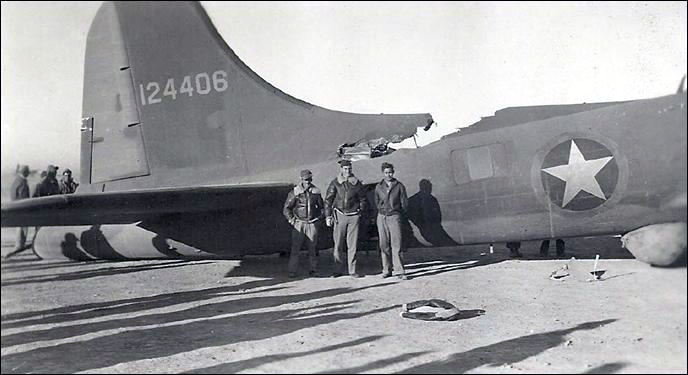
the last flight of the B-17 All American


A mid-air collision on February 1, 1943, between a B-17 and a German fighter over the Tunis dock area, became the subject of one of the most famous photographs of WW II.
    An enemy fighter attacking a 97th Bomb Group formation went out of control, probably with a wounded pilot, then continued its crashing descent into the rear of the fuselage of a Fortress named "All  American", piloted by Lt. Kendrick R. Bragg, of the 414th  Bomb Squadron. When it struck, the fighter broke apart, but left some pieces in the B-17. The left horizontal stabilizer of the Fortress and left elevator were completely torn away. The two right engines were out and one on the left had a serious oil pump leak. The vertical fin and the rudder had been damaged, the fuselage had been cut almost completely through connected only at two small parts of the frame, and the radios, electrical and oxygen systems were damaged. There was also a hole in the top that was over 16 feet long and 4 feet wide at its widest; the split in the fuselage went all the way to the top gunner's turret.


Although the tail actually bounced and swayed in the wind and twisted when the  plane turned and all the control cables were severed, except one single elevator cable still worked, and the aircraft miraculously still flew!

The tail gunner was trapped because there was no floor connecting the tail to the rest of the plane. The waist and tail gunners used parts of the German fighter and their own parachute harnesses in an attempt to keep the tail from ripping off and the two sides of the fuselage from splitting apart. 
While the crew was trying to keep the bomber from coming apart, the pilot continued on his bomb run and released his bombs over the target.


When the bomb bay doors were opened, the wind turbulence was so great that it blew one of the waist gunners into the broken tail section. It took several minutes and four crew members to pass him ropes from parachutes and haul him back into the forward part of the plane. When they tried to do the same for the tail gunner, the tail began flapping so hard that it began to break off. The weight of the gunner was adding some stability to the tail section, so he went back to his position.

The turn back toward England had to be very slow to keep the tail from twisting off. They actually covered almost 70 miles to make the turn home. The bomber was so badly damaged that it was losing altitude and speed and was soon alone in the sky.
 
For a brief time, two more Me-109 German fighters attacked the All American. Despite the extensive damage, all of the machine gunners were able to respond to these attacks and soon drove off the fighters. The two waist gunners stood up with their heads sticking out through the hole in the top of the  fuselage to aim and fire their machine guns. The tail gunner had to shoot in short bursts because the recoil was actually causing the plane to turn. 


Allied P-51 fighters intercepted the All American as it crossed over the Channel and took one of the pictures shown. They also radioed to the base describing that the appendage was waving like a fish tail and that the  plane would not make it and to send out boats to rescue the crew when they bailed out.
 
The fighters stayed with the Fortress, taking hand signals from Lt. Bragg and relaying them to the base. Lt. Bragg signaled that 5 parachutes and the spare had  been "used" so five of the crew could not bail out. He made the  decision that if they could not bail out safely, then he would stay with the plane to land it. 
Two and a half hours after being hit, the aircraft made its final turn to line up with the runway while it was still over 40 miles away. It descended into an emergency landing and a normal roll-out on its  landing gear.

When the ambulance pulled alongside, it was waved off because not a single member of the crew had been injured. No one could believe that the aircraft could still fly in such a condition. The Fortress sat placidly until the crew all exited through the door in the fuselage and the tail gunner had climbed down a ladder, at which time the entire rear section of the aircraft collapsed .
 Thanks to Randy for the email!